
Playbook & Trajectory
Profile
I take ownership of my work — and my word. A crew is like a lens: the tighter the focus, the sharper the image. I know when to lead, when to follow, and how to keep the team locked in on the goal. Clear communication, mutual respect, and showing up — that’s how you keep balance between the individual, the squad, and the community we serve. That balance is where the real work lives.
Creative Arsenal
I shoot, edit imagery, design sound, analyze, strategize, and compose — and I keep learning new things. I’m not the best at everything, and that’s fine with me. Where I shine, I’m sharp and competitive; where I don’t, I trust my crew. They’re my greatest asset — the reason I can push limits without fear. I protect them, back them, and fight for them with everything I’ve got, because they’re my lifeline — my redline.
Assets
Rolling with an EU Class B license and a ’97 V6 Audi A6, I can hit any spot in the Schengen Area. My rig? A mobile studio with four cameras, built for both photo and video. I fly light—licensed to operate a 249g drone—and I shoot Canon Log in 4K when the project calls for it, or keep it tight at 1080p for multi-cam work.
Languages
Native Arabic, spoken by necessity. North American English is my true language — the voice of my mind, heart, and soul. Basic German after a decade in Germany and Austria, by choice, to preserve the cadence of my English and the global mindset it carries.
Awards
Honored by Amazon, Bamberg, and Damascus — but my real prize is my reputation. Titles fade; integrity stays. I work for a future worthy of our children, not for medals, but to be a living thread in the fabric of humanity.
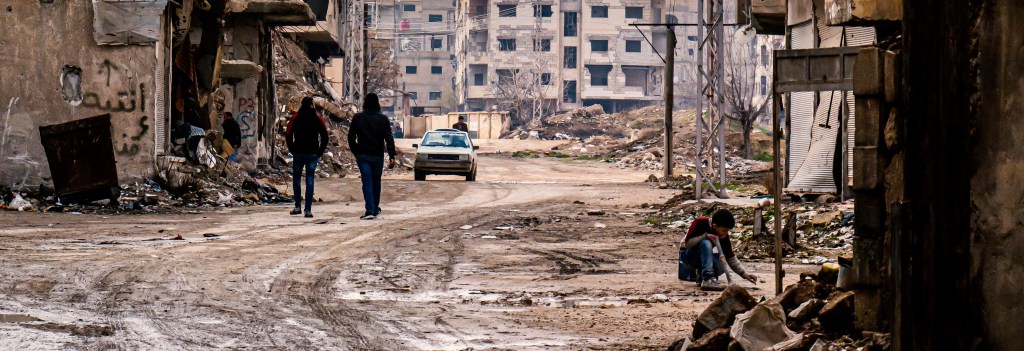
Outer Damascus | Eastern Ghouta | December 2019
Education in Levant
— Production Engineering
At sixteen, while others worked gas pumps or served tables, I stepped into a startup workshop building machines for every industry imaginable — textile, ceramic, paper, food. My first task as “warehouse manager” was to turn chaos into order. I did it in a week. A computer followed, then Excel sheets, then formulas of my own design. Soon I was working alongside engineers and master craftsmen, building a system to calculate costs down to each cog, blade, and cylinder. I never finished it — we had no YouTube tutorials, no manuals, only time and ingenuity. But I learned to love the craft: the harmony between man and metal, the greasy rhythm of creation, the quiet genius of a team turning raw steel into miracles.
— English Literature | Damascus University
After spending every high school summer in mechanical engineering, my parents couldn’t believe I chose English Literature instead—impractical, unprestigious, but captivating. In Syria, a bachelor’s in English literature means a little Shakespeare and a lot of grammar drills, with the modest aim of speaking English “moderately” by graduation. I chose English anyway — not for prestige or money, but for the air. Behind the Brutalist walls of Assad’s Syria, it was my window to the world, my safest vehicle out, and my passage into global villages I now call home. Those four “wasted” years gave me not just a language, but a new life. When mortars fell on Damascus in 2014, English was my way to tell the world what was happening. When journalism failed me, it became my ticket to Europe — a universal passport that let me both fight and retreat.
— Journalism
In 2011, I traded my graduation plans for the Arab Spring. I marched, wrote anti-Assad poetry, and believed change was coming — until I saw my country burn in the name of democracy. Fleeing Damascus, I landed in Amman, where a chance meeting with American journalist Kristen Gillespie pulled me into media. She taught me to write, interview, and analyze — but I quickly saw the limits. From exile, truth was guesswork. In 2013, I returned to Damascus to report from the ground, connected to all “sides,” only to find there were too many sides to name. The truth was fractured beyond reach. Journalism didn’t just fail me — it couldn’t succeed.
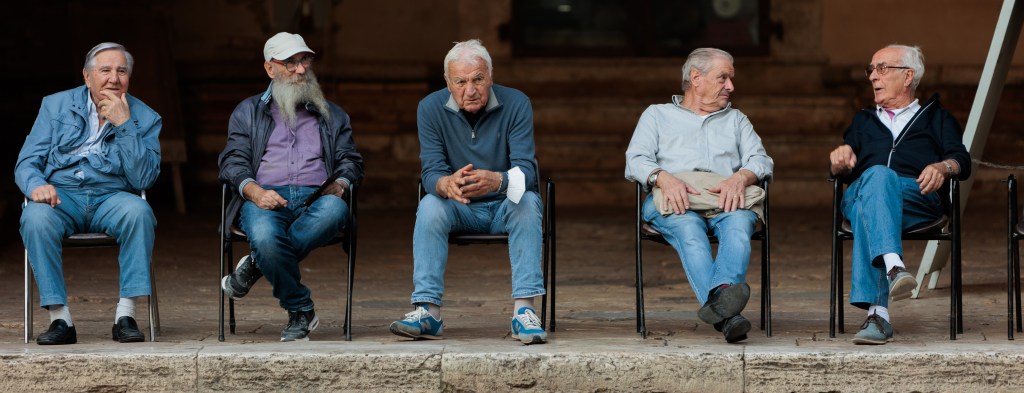
Friends in Tuscany | Siena | September 2023
European Education
— Joint European Master’s Degree in English and American Studies | University of Graz & Bamberg & Partner Universities
For the first time, I was taught how to do real research and embrace critical analysis. I studied migration literature to understand myself, auteur cinema to meet my heroes, and media discourse analysis to uncover why broadcast journalism failed in Syria and Ukraine. My in-field experience meant I didn’t have to dig far for answers. I didn’t study media and culture to join the old systems — I studied them to learn why they broke, so I could help build something better. This joint program took me through four universities across Europe, moving beyond literature into sociolinguistics, politics, and globalization. At the University of Bamberg, I worked as a Student Assistant and Media Contractor — mobilizing student groups, leading video productions, and writing speeches and articles — bridging theory with action.
— Media production
In 2015, I moved to the EU to pursue my MA and understand how European societies co-exist. I bought my first DSLR — a Sony Alpha a58 — to document the journey. What began as class presentations turned into something else the day I replaced PowerPoint with a video essay on the “War of Words” in American culture. It was new to my department, earned me a job as a student assistant, and gave me my first proof of concept: real social media, built on real people, telling a story that mattered. From there, my lens carried me across two worlds — academic research in European institutions and the North American creative YouTube community. Photography became not just a craft but a force, connecting light, action, and passion. When COVID halted the stories I wanted to tell, I joined Amazon to fund my own studio — using the time to observe, test, and refine how content moves people, both online and in private.
— Kitchen
I grew up spoiled in Damascus — never cooked, never cleaned, never lifted a hand in the house. Supporting myself during my studies in Europe changed that. The kitchen became my therapy, a step away from the tangled wires of creative and intellectual work, into something physical, tactile — rare currency in a software-dominated century. Will I return to it one day? Maybe. But I know this: when my crew finishes a mission, they can count on me to cook them something awesome.
— Cyber Logistics & Internal Communication
After COVID took my kitchen crew, I traded clinking glasses for conveyor belts. The first days hit like a storm — four hours on the road to a warehouse in the middle of nowhere, voices raised over the hum of machines that promised one-day delivery. I’d clicked “buy” a thousand times before, never once thinking about the miles, the hands, the precision it took to get a lens to my door. Inside, I saw both the grit and the cracks — the human cost and the human brilliance. Amazon handed me chances: to tell stories on their internal Broadcast website, to lead teams, to walk their digital corridors. I did for a while but then I chose the floor over the office, the work over the title — shoulder to shoulder with the people who carried the load. It was hard. It broke me for a while. But it taught me never to take the system, or the people who power it, for granted.
Current Occupation | ORBIT Mapper | Damascus Diary
 Roumani Line